
Joya Cousin: Portraiture for Legacy The Weight of Experience
Joya Cousin is a luxury portrait artist based in France who creates museum-quality archival works for leaders, founders, and families who wish to be remembered.
She believes in the simple conviction that legacy is built deliberately, over time, and with intention. Before dedicating herself fully to portraiture, Joya Cousin forged an award-winning career in leadership positions, working in environments where authority had consequences and decisions stood the test of time. That experience shaped her art. Rigor, responsibility, and a long-term vision now define how she approaches each commission.
Scale plays a decisive role in her practice. While she creates refined and intimate portraits, this luxury portrait artist is particularly captivated by Monumental Iconography, which includes works exceeding two meters in height. These portraits are designed for private estates, landmark residences, and institutional settings where scale establishes presence and authority. Here, size becomes a language.
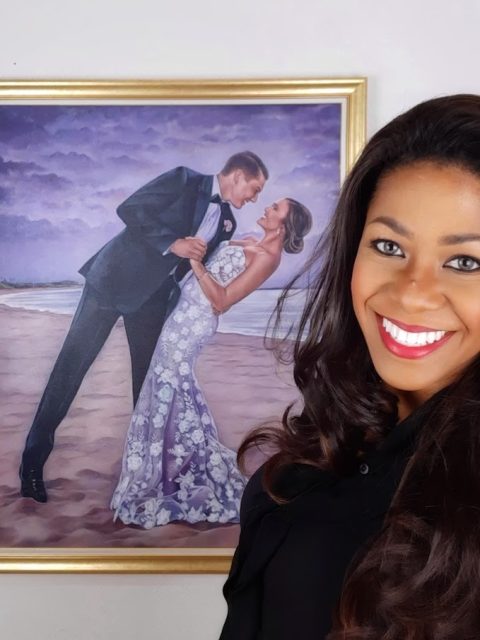
Joya grew up in the Caribbean, although she now lives and works in France. Her unique creative process brings a nuanced understanding of heritage and cultural memory to her work. Her international life and clientele allow her to navigate with confidence between different traditions of power and legacy.
Luxury Portraiture and Monumental Presence
Most of her clients operate internationally, as does her understanding of legacy. Portraits as icons of legacy.
She works from important personal photographs, extracting individual history visually with precision and restraint. She creates her works in museum-quality oil on canvas, where each painting is conceived to endure physically and symbolically through generations. These works serve as visual anchors for those who understand the responsibility of visibility.
Today, her portraits establish presence, assert authority, and maintain continuity in spaces where permanence matters. They are commissioned by founders, high-ranking physicians, diplomats, military figures, matriarchs, and patriarchs for whom success is taken for granted, and what matters now is continuity that endures over time. Joya’s works are found in private and public collections throughout Europe, the United States, and the Caribbean, reflecting the trust placed in her by individuals accustomed to operating at the highest levels. Legacy, made visible.
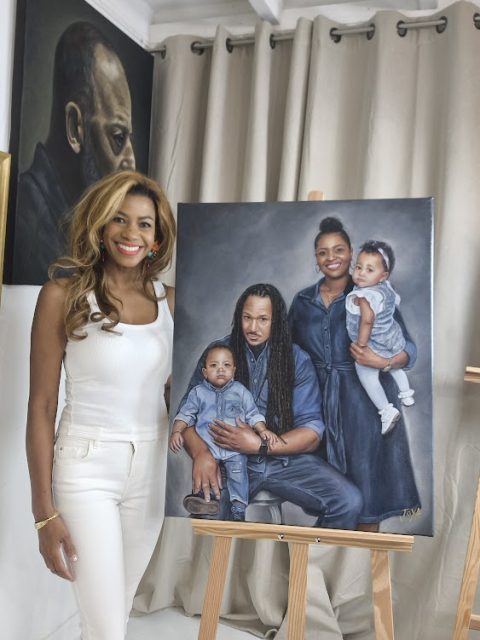
Each commission follows a clear and professional framework, balancing artistic freedom with firm boundaries. This structure allows for the emergence of meaningful work, especially in relationships that develop entirely remotely. In Joya Cousin’s practice, portraiture transcends mere likeness. These works become architecture for memory, embodying love, authority, and continuity. A legacy, when taken seriously, is built to last.
Your work speaks of legacy rather than simple representation. When did portraiture become, for you, an act of permanence?
Portraiture became an act of permanence for me when I realized how easily influence disperses if no one gives it form.
During my years in executive leadership, I saw how decisions, standards, and culture outlived the individuals who initiated them. What endured was not charisma, but structure. Not visibility, but consequence. I also saw how foundational contributions are absorbed into institutions, unnamed and unmarked.
That awareness changed how I paint. When I work with a client, we are not simply creating an image. We are making a deliberate choice to anchor identity. We are deciding that the life behind the work will remain visible.
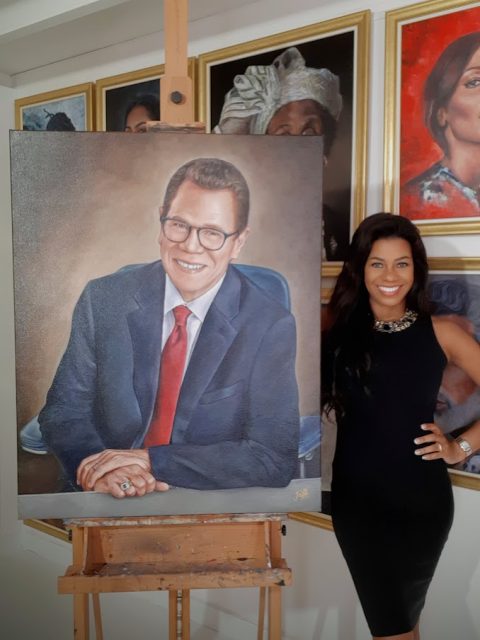
You had a successful leadership career before becoming an artist. How did responsibility and decision-making shape your artistic discipline?
Leadership trained me to think in terms of consequence.
At the executive level, every decision carries weight beyond the present moment. You learn to eliminate sentimentality and focus on what will hold.
I bring that same discipline to my studio. Materials are archival because the work is meant to endure. The process is structured because clarity creates confidence. A portrait intended to be handed down cannot be casual. It requires foresight, precision, and restraint.
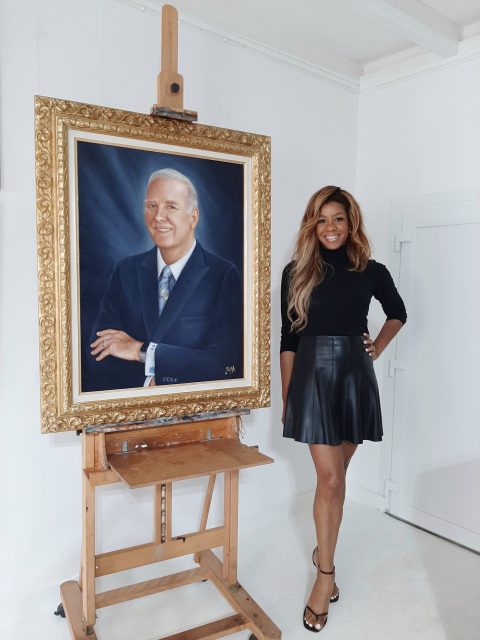
Monumental Iconography plays a central role in your practice. What does scale allow you to express that intimacy cannot?
Scale changes the psychological experience of a portrait.
An intimate portrait invites proximity. A monumental portrait commands a space. It shifts the atmosphere of a room, not through spectacle, but through proportion. At significant scale, the subject does not blend into the architecture. The architecture adjusts to the subject.
For founders, diplomats, military leaders, and matriarchs whose decisions shaped others, scale allows that gravity to be felt physically. It makes impact undeniable.
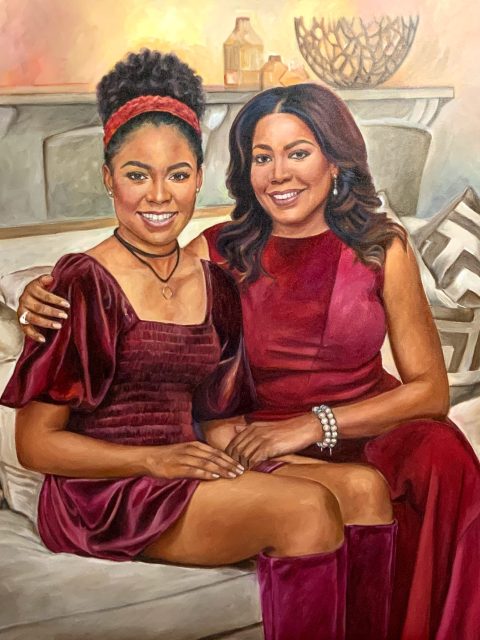
Your portraits often inhabit spaces of power and continuity. Do you approach these commissions differently from more personal works?
Public authority and private lineage carry equal consequence.
In institutional environments, the portrait must stand within architecture and history; it cannot feel decorative or temporary. In private homes, it must sit within lineage and intimacy, often becoming part of a family narrative that extends beyond the present generation.
Whether I am working with a head of an institution or a parent shaping a child, the question is the same: what are we choosing to carry forward? Power and tenderness both shape the future. Both require the same level of stewardship.
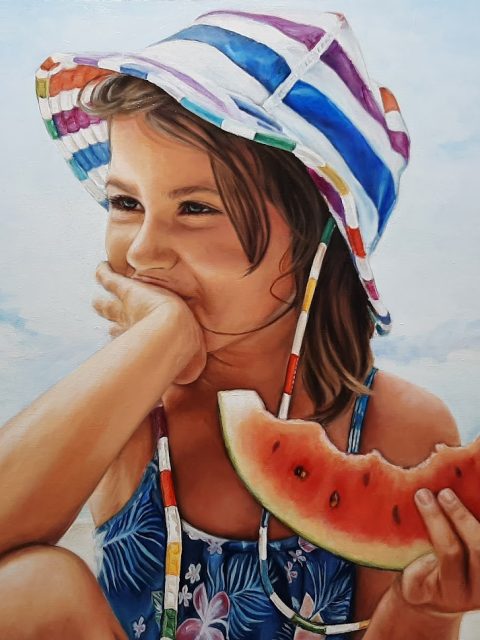
You work from important personal photographs. What do you look for beyond the visible image?
I look for what in that image will still matter decades from now.
A photograph captures a fraction of a second, but I am interested in the life around it. The steadiness in posture. The quality of the gaze. The relational dynamics between the figures. With leaders, I look for accumulated character. With families, I look for transmission in motion.
When I paint children, I am not painting achievement. I am painting origin — the early architecture of identity, the environment in which resilience, confidence, and belonging are taking root. I ask what the image represents now, and what it will represent decades from today.
The painting is not a reproduction. It is a distillation of what must endure.
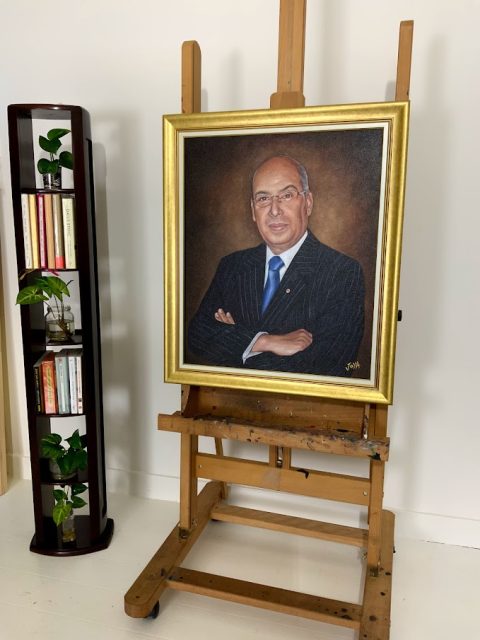
Legacy is a word frequently used but rarely defined. How do you personally interpret it through your paintings?
Legacy, to me, is stewardship made visible.
Whether a client commissions a portrait of an ancestor, of themselves, or of their children, they are making the same decision: to take responsibility for how their story is carried forward. My role is to recognize what has shaped the family or institution and give it form. I am not inventing importance; I am clarifying it and anchoring it.
A portrait is not about ornament. It is about acknowledgment. It affirms identity and assures that what has been built — through sacrifice, work, love, or leadership — will not be reduced to a story told once and forgotten.
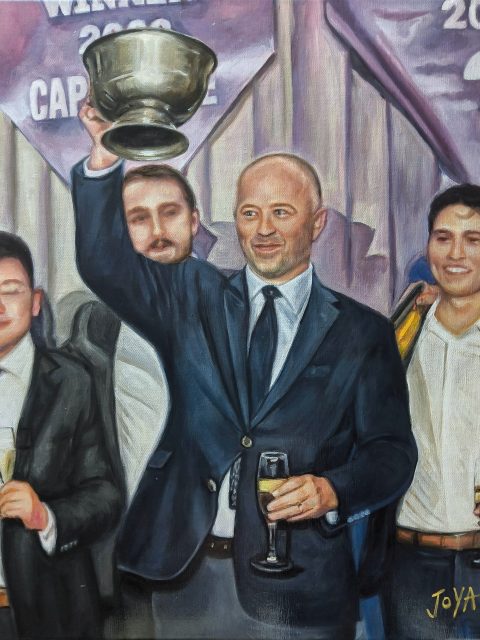
Your clients are leaders, founders, and families accustomed to visibility. How do you translate authority without falling into symbolism or excess?
Authority does not need to be announced.
It reveals itself in posture, proportion, scale, and restraint. I avoid obvious symbols and theatrical gestures because they often weaken what they attempt to amplify. By simplifying the environment and removing distraction, I allow the individual to carry the weight of the image.
Whether I am painting a diplomat or a child at the center of a close-knit family, the principle is the same: presence without performance.
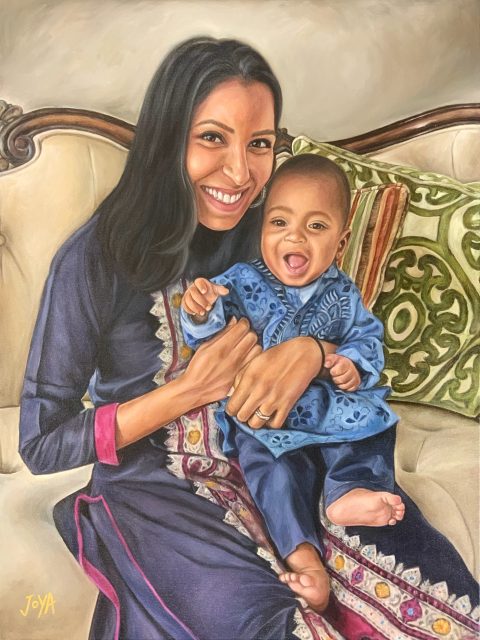
Growing up in the Caribbean and living in France, how has cultural memory influenced your perception of identity and presence?
Cultural memory shaped how I understand identity long before I began painting.
In the Caribbean, ancestry is lived. Elders remain part of daily life, and identity is formed in their presence. You grow up knowing who you are because you are constantly reminded of who stood before you. Continuity is reinforced through proximity.
Living in France revealed another dimension of permanence. Here, identity is stabilized through art, architecture, and institutions built to endure. I came to understand that once a person is no longer physically present, continuity does not sustain itself. It must be given form within the spaces where daily life unfolds.
That understanding shapes my work. When a family chooses to commission a portrait and give it a place in their home, the painting becomes part of their visual language. What proximity once sustained, form now carries.
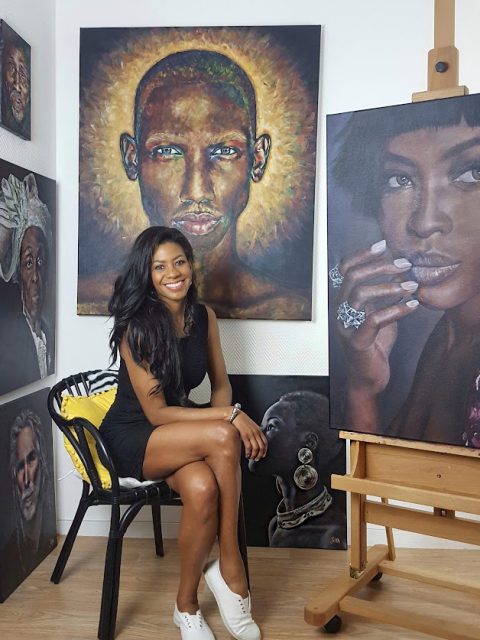
Many of your commissions are developed entirely remotely. How do you build trust in such an intimate artistic process?
Trust begins with clarity.
Many of my clients commission work across continents and time zones. From the outset, the process, materials, scope, and timeline are explicit. There is no ambiguity about what we are building together.
Serious work requires structure. Structure builds confidence. Distance does not diminish intimacy; it sharpens it. The trust is rooted in mutual commitment, not proximity.
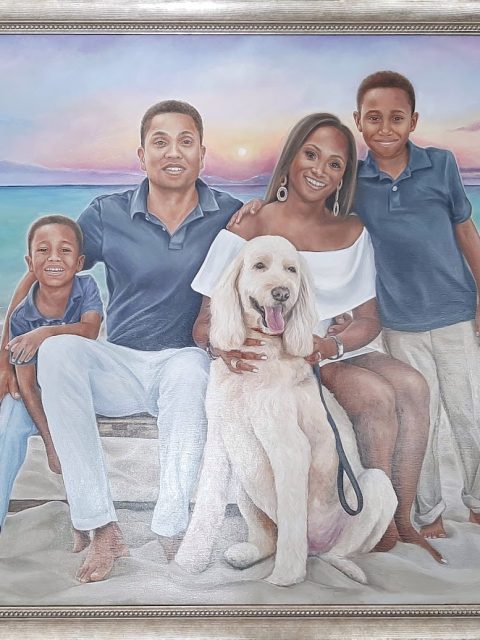
Portraiture has historically been linked to status. In contemporary times, what responsibility does portraiture carry?
Portraiture has long been linked to status, and that is not accidental.
Historically, it marked legitimacy, continuity, and contribution within a lineage or institution. That has not changed. What has changed is how easily lives are documented yet rarely preserved.
Today, portraiture carries the responsibility of giving lasting form to identity. To commission a portrait is to assume stewardship over memory. It is a decision that certain lives and relationships will not be diminished, even if they are never publicly displayed.
A portrait remains a symbol of legacy — not of excess, but of continuity.